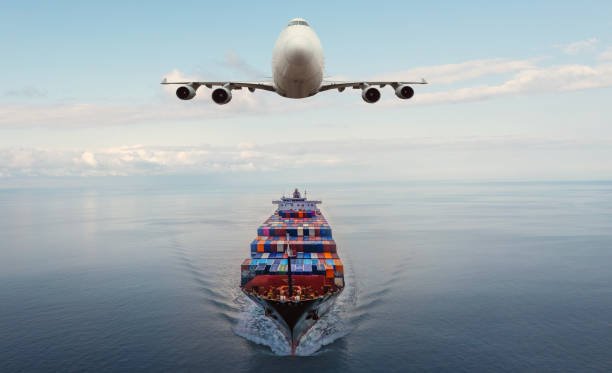
Air Freight vs Sea Freight — Which One Should You Choose?
Choosing the right shipping method directly impacts your costs, delivery time, and overall business efficiency. Whether you’re moving urgent cargo or large-volume goods, understanding the differences between air and sea freight helps you make the smartest decision.
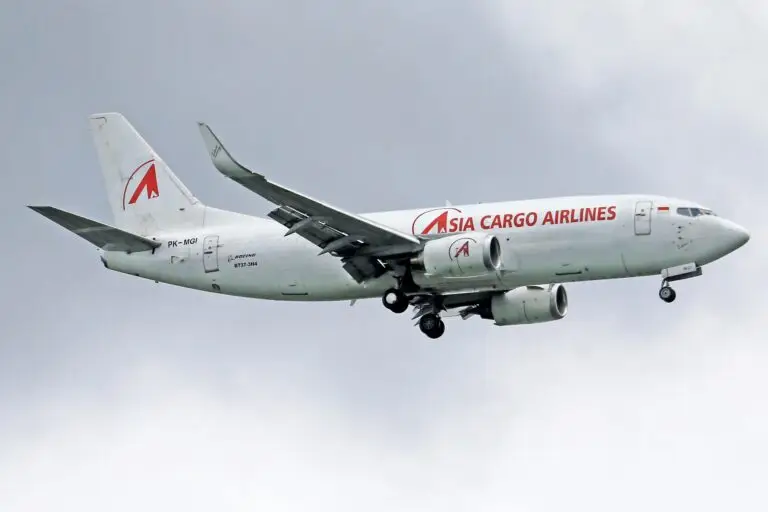
✈️ Air Freight (Fast & Reliable)
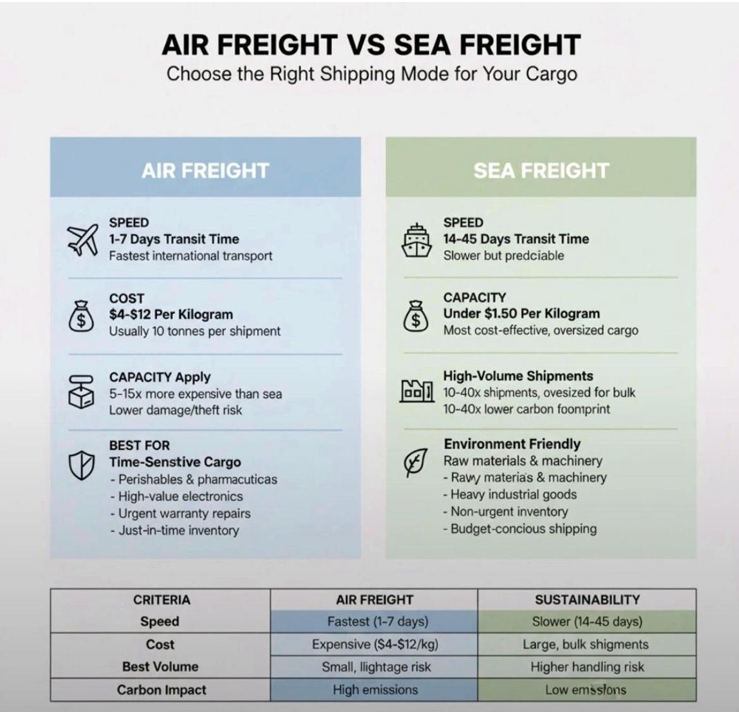
Delivery Time: 1–7 days
Cost: Higher (approximately $4–$12 per kg)
✅ Best For:
- Urgent shipments
- Perishable goods (food, pharmaceuticals)
- High-value items (electronics, luxury products)
- Emergency spare parts
🚀 Advantages:
- Extremely fast delivery
- Lower risk of damage due to shorter transit time
- Higher security for valuable cargo
⚠️ Keep in Mind:
- More expensive compared to sea freight
- Not suitable for heavy or bulky shipments
Air freight is ideal when speed and reliability are your top priorities.
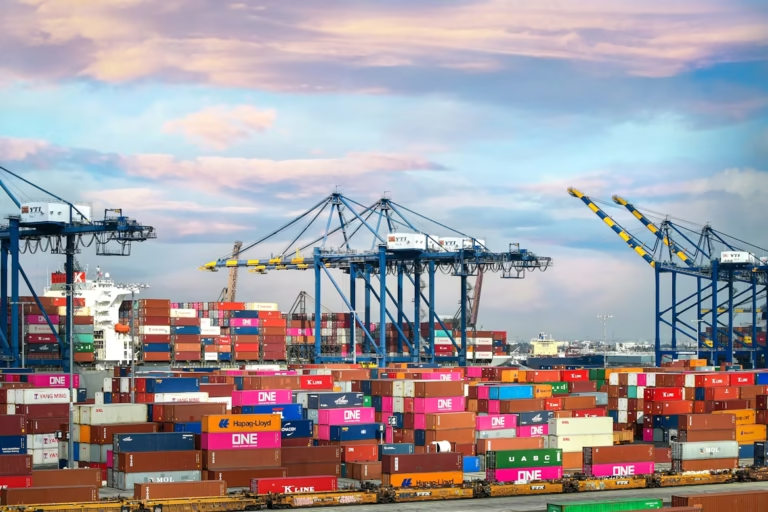
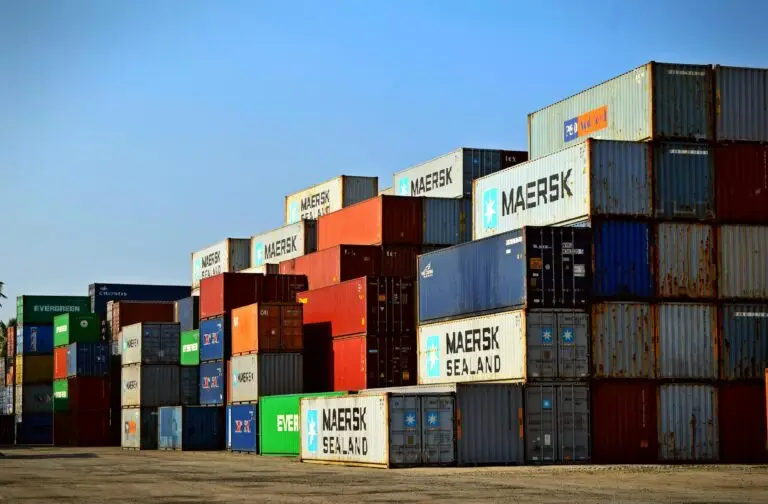
🚢 Sea Freight (Cost-Effective & Bulk Shipping)
Delivery Time: 14–45 days
Cost: Lower (often under $1.50 per kg)
✅ Best For:
- Heavy or oversized cargo
- Machinery and raw materials
- Large-volume shipments
- Businesses focused on reducing logistics costs
🚢 Advantages:
- Highly economical for bulk shipments
- Suitable for heavy and oversized goods
- More environmentally efficient for large loads
⚠️ Keep in Mind:
- Longer transit time
- Requires advanced planning and inventory management
Sea freight is the best option when cost efficiency and shipment size matter more than speed.
📌 How to Choose the Right Shipping Method?
Before deciding, ask yourself:
- Is the shipment urgent? → Choose Air Freight
- Is it heavy or high volume? → Choose Sea Freight
- Is budget your priority? → Sea Freight is better
- Is speed your priority? → Air Freight is better
Final Thoughts
There is no one-size-fits-all solution in logistics. The right choice depends on your shipment type, timeline, and budget.
Smart businesses evaluate both options carefully to optimize cost, efficiency, and customer satisfaction.